Travel tips
Travel tips for Qatar
The practical things that make a first trip easier: when to come, how to handle the heat, how Ramadan changes the rhythm of the day, and what is expected of you in public.
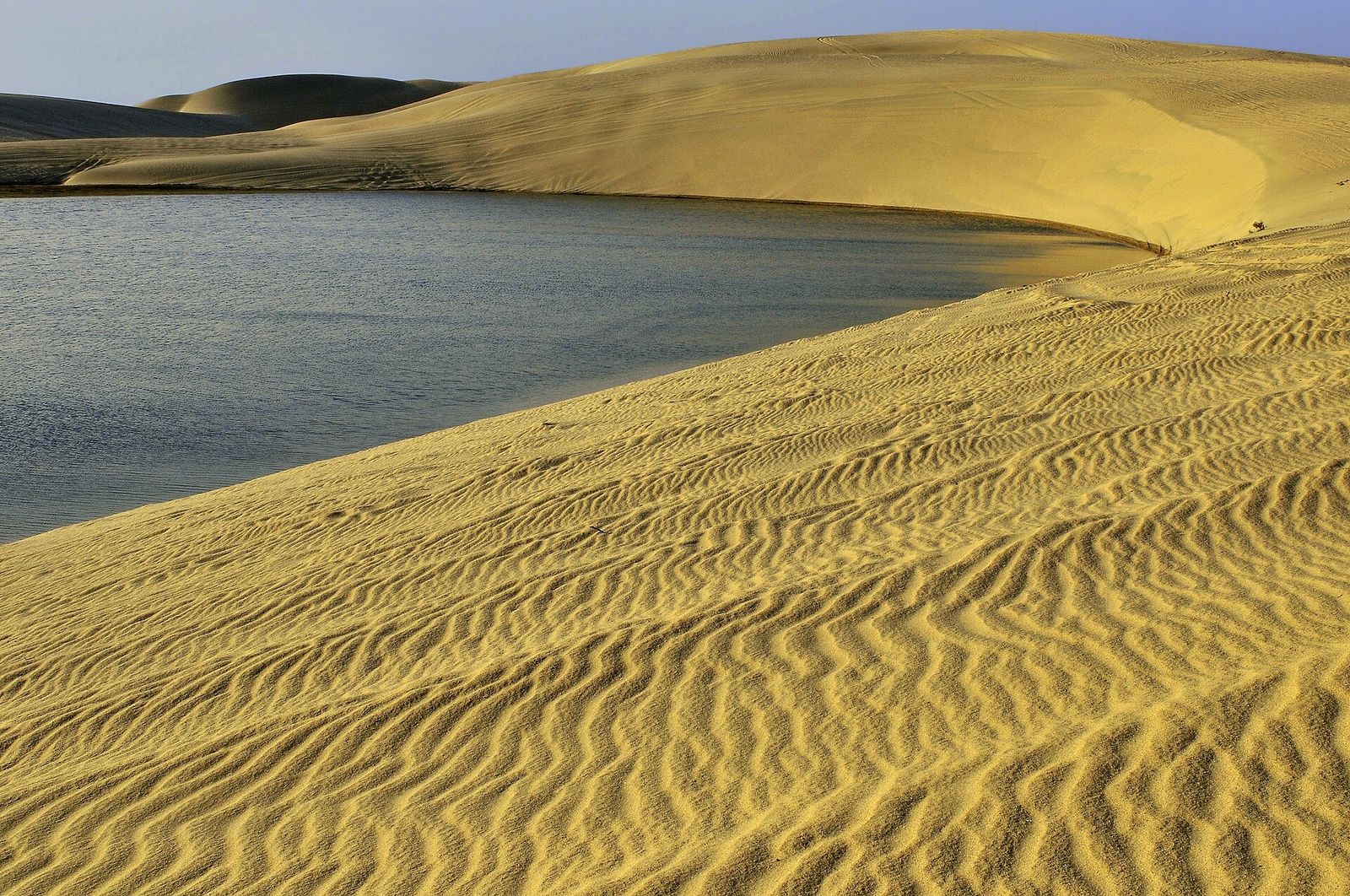
Dunes meet the inland sea at Khor Al Adaid, in the far south-east.
Season planner
When to go
The comfortable season runs roughly from November to March. In December, January and February, daytime highs in Doha sit in the low to mid-20s °C, nights are mild and an evening outdoors is a pleasure. March and November are warm but pleasant. April and October already feel hot to most visitors, and from May to September heat and humidity make long spells outside genuinely hard work, with average highs above 40 °C in mid-summer.
The cooler months are also when most things happen: festivals, race weekends, outdoor concerts and the busiest football calendar. If your dates are fixed, plan early.
Average daily high in Doha
Rounded, in °C, with a rough guide to comfort
- Jan23°ideal
- Feb24°ideal
- Mar28°good
- Apr33°warm
- May39°hot
- Jun42°extreme heat
- Jul42°extreme heat
- Aug41°extreme heat
- Sep39°hot
- Oct36°warm
- Nov30°good
- Dec25°ideal
- Ideal
- Good
- Warm
- Hot
- Extreme heat
Based on Qatar Meteorological Department climate normals for 1992 to 2021. Humidity is highest in late summer and in the winter months.
Monthly temperatures
The figures below are long-term averages for Doha. Inland areas are often hotter by day and cooler at night, and on the coast it is the humidity, as much as the temperature, that wears you down in late summer.
| Month | Average high | Average low |
|---|---|---|
| January | 23 | 15 |
| February | 24 | 16 |
| March | 28 | 19 |
| April | 33 | 23 |
| May | 39 | 28 |
| June | 42 | 31 |
| July | 42 | 32 |
| August | 41 | 32 |
| September | 39 | 30 |
| October | 36 | 27 |
| November | 30 | 22 |
| December | 25 | 17 |
Rounded from Qatar Meteorological Department climate normals for 1992 to 2021. Individual days can be several degrees hotter or cooler.
Heat safety
Qatar's heat is not something to tough out. From late spring to early autumn, treat the middle of the day as indoor time and save sightseeing for early morning and after sunset; even in winter the midday sun is strong. Doha's distances look walkable on a map but feel twice as long in August. The metro, museums and malls are cool refuges, and the contrast is sharp enough that a light layer earns its place in your bag.
- A refillable water bottle, topped up often, even before you feel thirsty
- A hat, sunglasses and high-factor sunscreen
- Loose, light-coloured clothes that cover shoulders and knees
- A light layer for air-conditioned carriages, malls and cinemas
- Rehydration salts if you will be outdoors for long
Know the signs of heatstroke
If you or someone with you feels dizzy, confused or sick, or stops sweating, get into shade or air-conditioning at once, cool down with water and seek medical help. For match days, see our matchday guide.
The weekend and the clock
The working week runs from Sunday to Thursday, and the weekend is Friday and Saturday. Friday mornings are quiet: many shops and some attractions open later, after midday prayers, and the city wakes up in the afternoon. Qatar keeps the same time all year, three hours ahead of UTC. Life runs late, especially in the hot months, and dinner at nine or ten in the evening is perfectly normal.
Ramadan and Eid
Ramadan, the month of fasting, changes the rhythm of the whole country. It follows the lunar calendar, so it moves about eleven days earlier each year; in 2027 it is expected to begin around 8 February, with the exact date confirmed by the sighting of the new moon. Between dawn and sunset Muslims abstain from food, drink and smoking, and visitors are expected not to eat, drink or smoke in public during daylight either. Some restaurants, mainly in hotels, serve discreetly during the day.
After sunset the mood changes completely. Iftar, the meal that breaks the fast, is a social occasion, and evenings fill with families, late shopping and events that run past midnight. Working hours are shorter and many attractions change their opening times, so check before you go. A greeting of "Ramadan Kareem" is always appreciated.
Ramadan ends with Eid al-Fitr, a holiday of several days for family visits and celebrations; Eid al-Adha follows about ten weeks later. Both bring busy roads, packed malls and cinemas, and some closures, so build some flexibility into your plans.
Dress and behaviour in public
Qatar is a conservative Muslim country and a very international one, and expectations in public reflect both. Nobody expects you to dress like a local, but modest clothing is the norm. A sensible rule for men and women alike is to cover shoulders and knees in malls, museums, souqs, government buildings and other public places, and to avoid very tight or see-through clothes. Swimwear belongs on the beach or by the pool. Women do not need to cover their hair in public, but will usually be asked to before entering a mosque.
Keep displays of affection low-key, avoid swearing or rude gestures, and stay patient and polite with officials; losing your temper in public goes down badly. When greeting someone of the opposite sex, wait to see whether they offer a hand; a hand on the heart is a polite alternative. Alcohol is served only in licensed venues, mostly in hotels, and being drunk in public is an offence. Drug laws are strict and some prescription medicines are controlled, so carry your prescriptions and check the rules for anything you take regularly.
Photography
Photograph the skyline, the souqs and the museums freely, but ask before taking pictures of people, and never photograph women or families without clear permission. Avoid pointing a camera at government buildings, palaces, military or police sites and security checkpoints. Flying a drone requires official permission. Inside museums, photography rules vary from gallery to gallery, so look for signs or ask staff.
Language
Arabic is the official language and comes first on road signs, menus and official notices, usually with English alongside. English is widely spoken in shops, restaurants, hotels and transport, and serves as the everyday common language between Qatar's many communities. Most residents are expatriates, so you will also hear Hindi, Malayalam, Urdu, Tagalog, Nepali and many other languages. A few words of Arabic go a long way; start with the glossary below.
Practical matters
Plugs and power
Sockets are mostly the British-style type G, with three rectangular pins, and the supply is 240 V. Some older buildings also have round-pin type D sockets, so a universal adapter is the safe choice.
Phones, cards and getting around
Mobile coverage is strong in Doha and Wi-Fi is common in hotels, malls and cafés; local SIM cards and eSIMs are easy to set up with your passport. Cards and contactless payments are widely accepted. For the metro, the Lusail Tram, buses and taxis, see our getting around guide. Traffic drives on the right; if you plan to drive, check the official licence requirements for your nationality first.
Health and safety
Qatar has a low crime rate and is generally regarded as comfortable for solo travellers, though normal precautions apply. Pharmacies are easy to find in Doha. Save the local emergency number in your phone before you arrive, and make sure your travel health cover matches your plans.
Public holidays
Qatar's public holidays are few but significant. Expect closures, crowds and changed opening hours on each of them.
| Holiday | When | What to expect |
|---|---|---|
| National Sport Day | Second Tuesday of February | A day off given over to exercise, with sports events and activities across the country |
| Eid al-Fitr | End of Ramadan; expected around 9 or 10 March 2027 | Several days of holiday, busy malls and cinemas, family visits |
| Eid al-Adha | Lunar date; expected around 16 May 2027 | Several days of holiday; many residents travel |
| Qatar National Day | 18 December | Celebrations across the country and big crowds along the Corniche |
Lunar holiday dates are confirmed shortly beforehand, and the length of each holiday is announced year by year.
National Day marks 18 December 1878, when Sheikh Jassim bin Mohammed Al Thani, regarded as the founder of the modern state, succeeded his father as ruler.
Entry requirements
Entry rules depend on your nationality and can change at short notice. Before you travel, check the official information from Qatar's Ministry of Interior and your own government's travel advice, and confirm the current requirements for passport validity, entry permission, health cover and customs.
Official sources only
We do not give entry or immigration advice. Government sources are the only reliable reference, so avoid relying on third-party summaries.
Useful Arabic words
Spellings vary, because Arabic is written in its own script and transliterated in several ways. These are the words you are most likely to hear or see.
A
- Abaya
- A long, loose outer robe, usually black, worn over clothes by many Qatari women.
- Agal
- The black cord that holds a man's headdress in place.
- Ahlan wa sahlan
- Welcome. A simple "ahlan" works as a friendly hello.
- As-salamu alaykum
- Peace be upon you: the standard greeting. The reply is "wa alaykum as-salam".
B
- Bisht
- A fine cloak, often edged in gold, worn over the thobe on formal occasions.
D
- Dallah
- The traditional long-spouted coffee pot and a symbol of hospitality.
- Dhow
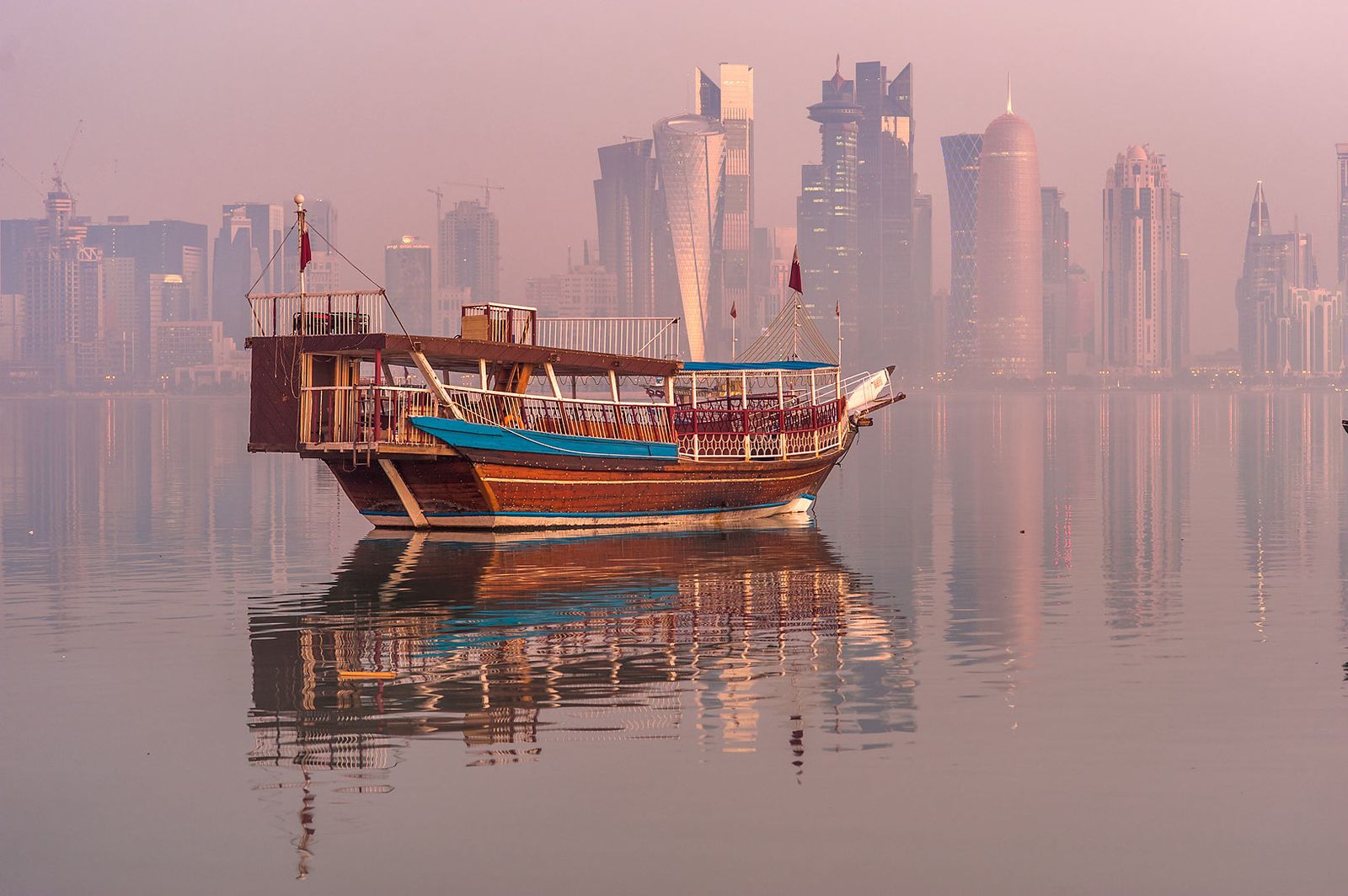
- A traditional wooden boat, once used for pearling and trade, still moored along the Corniche.
E
- Eid Mubarak
- Blessed Eid: the greeting for both Eid holidays.
G
- Gahwa
- Arabic coffee, lightly roasted and spiced with cardamom, served in small cups. Gently shake your cup from side to side when you have had enough.
- Garangao
- A mid-Ramadan tradition in which children in traditional dress go from house to house collecting sweets and nuts.
- Ghutra
- The headdress worn by Qatari men, usually white.
H
- Halal
- Permitted under Islamic law; used above all of food.
I
- Iftar
- The meal that breaks the fast at sunset during Ramadan.
- Inshallah
- God willing. Used for anything planned in the future, from tomorrow's meeting to next year's holiday.
K
- Karak
- Strong tea boiled with milk, sugar and spices, served at stalls all over the country.
M
- Ma'a salama
- Goodbye.
- Mabrook
- Congratulations.
- Majlis
- A sitting room for receiving guests and, by extension, a council or assembly.
R
- Ramadan Kareem
- Generous Ramadan: the usual greeting during the holy month.
S
- Shukran
- Thank you. The reply is "afwan", you are welcome.
- Souq
- A traditional market.
- Suhoor
- The meal eaten before dawn during Ramadan.
T
- Thobe
- The long garment, usually white, worn by Qatari men; also written thawb.
Y
- Yalla
- Let's go, come on: one of the most useful words in the Gulf.