Ras Abu Aboud, Doha · The container stadium
Stadium 974
A waterfront arena built from shipping containers and designed to be taken apart after 2022. Instead it stayed, and it still hosts matches. Here is how it works and how to reach it on the Gold Line.
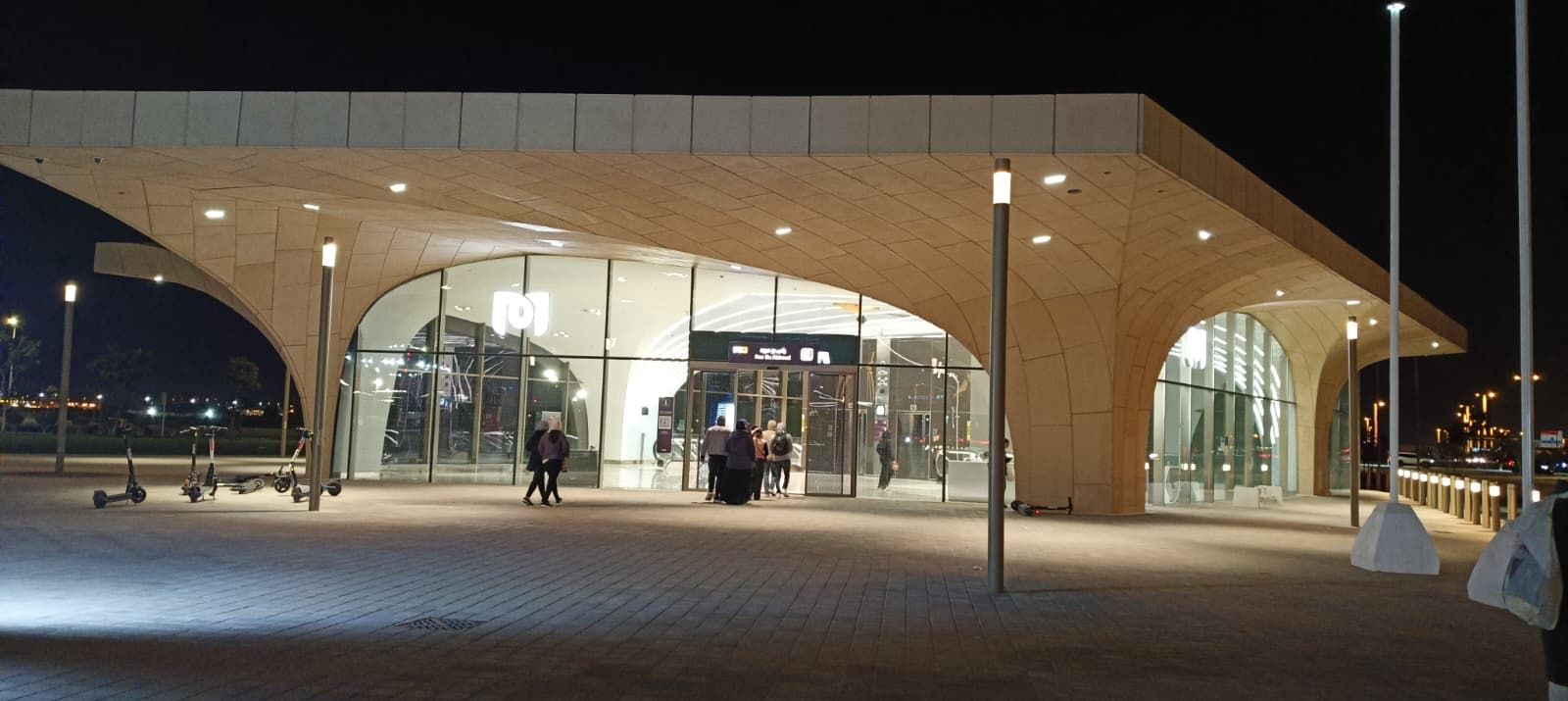
Ras Bu Abboud station on the Gold Line, the stop for Stadium 974.
Spec sheet
Figures for the 2022 tournament layout- Area / city
- Ras Abu Aboud, DohaOn the waterfront, about 3 km east of Souq Waqif
- Opened
- 202130 November 2021, at the Arab Cup
- Tournament capacity
- c. 44,1002022 World Cup layout (44,089)
- Design concept
- 974 shipping containersFenwick Iribarren Architects
- Nearest metro
- Gold Ras Bu AbboudRoughly 800 m to 1 km on foot
- Status
- Designed to be fully demountable. At the time of our last check it was still standing on its original site, and it hosted matches in December 2024 and December 2025.
Overview
Stadium 974 was the experiment of the 2022 World Cup: a 44,000-seat arena assembled from recycled shipping containers and modular steel on the Doha waterfront, built so that it could be unbolted and shipped somewhere else afterwards. It hosted seven matches during the tournament, the last of them on 5 December 2022, when Brazil beat South Korea 4–1 in the round of 16.
The headline many people remember is that it would disappear once the football was over. That has not happened. At our last check, the stadium was still on its original site, and it was back in use for the Intercontinental Cup in December 2024 and the Arab Cup in December 2025. It is also the only 2022 venue with no mechanical cooling, which shapes when it is used and what a visit feels like.
Ras Abu Aboud and the waterfront
The stadium stands at Ras Abu Aboud, a headland on the eastern side of Doha Bay, roughly 3 km east of Souq Waqif as the crow flies. On a clear day the towers of West Bay line up on the far side of the water. The site has an industrial past close to Doha's old port, and the architects used that history: a stadium made from shipping containers fits a stretch of shore long linked with shipping and freight.
The area feels very different from the old souqs a few minutes away. It is open, flat and exposed, with wide roads, big empty plots and not much shade, and it is a place you visit for the stadium and the sea air rather than for an afternoon of strolling. One detail saves confusion: the district is usually spelled Ras Abu Aboud, while the metro station is Ras Bu Abboud.
Containers, steel and a dialling code
The stadium was designed by the Spanish practice Fenwick Iribarren Architects, working with the structural engineers Schlaich Bergermann Partner. Its name does double duty. It refers to the 974 recycled shipping containers used in the build, and +974 is also Qatar's international dialling code.
The containers are slotted into a modular steel frame, part of it recycled steel, and many are painted in strong primary colours. There is no smooth outer skin: you see the frame, the stairs and the stacked boxes, like a giant construction kit left half-open. Several containers house staircases, and others were fitted out as toilets, refreshment kiosks and other facilities. The architects' stated aim was to avoid a "white elephant", a huge venue left half-empty after the tournament, by designing one that could be taken apart and reused.
Big matches
The stadium opened on 30 November 2021 with an Arab Cup match in which the United Arab Emirates beat Syria 2–1, ten days after its new name was unveiled. Until then it had been known as Ras Abu Aboud Stadium. At the World Cup its seven matches included France v Denmark and Brazil v Switzerland. The record attendance of 44,089 came at Poland v Argentina on 30 November 2022.
Since the tournament, it has been used more than its temporary label suggests. It staged two matches at the Intercontinental Cup in December 2024 and France's Trophée des Champions, the season-opening super cup, in January 2025, and four group matches at the Arab Cup in December 2025.
The stadium without air conditioning
Seven of the eight 2022 stadiums blow chilled air at players and spectators. Stadium 974 does not. Its waterfront position catches the land and sea breezes, and the open, permeable structure lets that air move through the stands. Organisers said this approach cut the venue's water use by close to 40 per cent compared with a cooled stadium, although that figure comes from the tournament side rather than independent measurement.
The catch is timing. Without cooling, all seven of its World Cup matches kicked off in the evening, after the worst of the day's heat. For a visitor, that means dressing for the actual weather: on a winter evening the breeze off the water can feel cool, and a light layer is welcome, but in the warmer months there is nowhere inside to hide from the humidity.
A demountable stadium that stayed
Stadium 974 was billed as the first fully demountable venue in World Cup history. Early plans linked it to a South American bid for the 2030 tournament, and later reports suggested it could be rebuilt in Africa. Neither move has happened. In November 2023 visiting journalists found it standing with its tournament signage still in place, and by the end of 2025 it was still on its original site and still in use.
That could change, as plans for the site have shifted more than once. If you are coming partly to see it, check recent news and the official event calendars first, and do not assume the area around it is open on a non-event day.
Getting there
The Gold Line ends at Ras Bu Abboud, a short walk from the stadium, which makes 974 one of the simplest venues to reach from central Doha. For an overview of lines and interchanges, see our Getting Around guide.
How to get there
-
Take the Gold line east to Ras Bu Abboud
From Msheireb, where all three lines meet, it is three stops: Souq Waqif, National Museum, then Ras Bu Abboud at the end of the line.
-
Walk to the stadium
The stadium is roughly 800 m to 1 km away, about 10 to 15 minutes on foot. On event days, follow the signed route, which may be longer than the direct line.
-
Or arrive by Road
Taxis and ride-hailing cars are dropped at designated zones on event days, usually some distance from the gates.
Event-day arrangements change. Check the metro operator's and the venue's current information before you travel.
Around the stadium
The Gold Line makes it easy to turn a visit into a half-day of sightseeing. One stop back towards the city, National Museum station serves Jean Nouvel's National Museum of Qatar, opened in March 2019, whose interlocking discs are modelled on the desert rose crystal. One stop further, Souq Waqif is at its best in the evening.
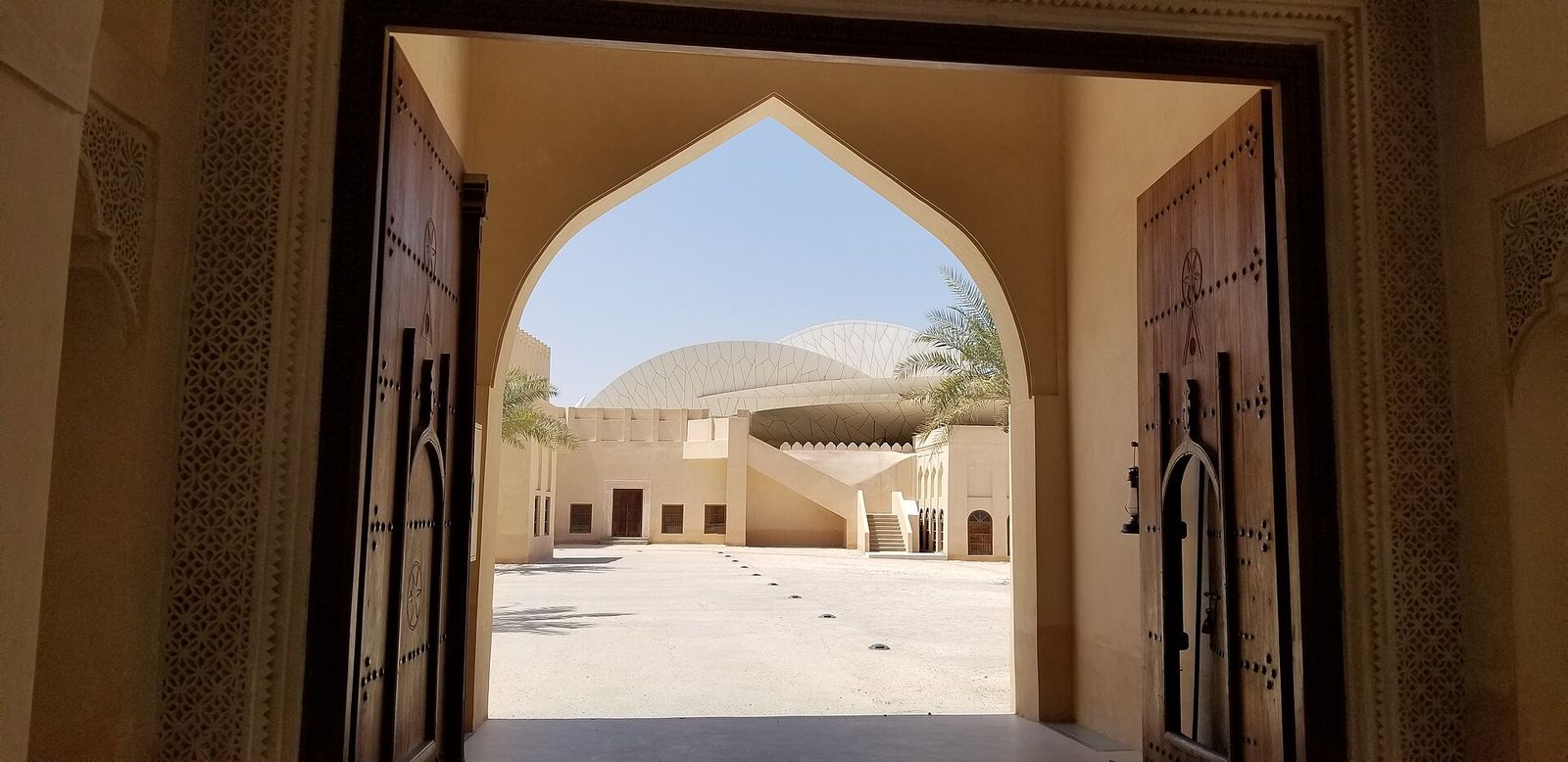
Along the waterfront to the west, I. M. Pei's Museum of Islamic Art stands on its own island with a park beside it, at the start of the Corniche. All of these are covered in our sights guide.
Visiting tips
Because Stadium 974 has no cooling, comfort depends on the weather more than at any other venue. The pleasant window runs roughly from November to March, and evenings are always the better choice. Shade around the site is scarce, so bring a hat for any daylight walking, and expect wind off the water to make the stands cooler than the streets on a winter night. Our Matchday Guide covers security, timing and getting home.
- Your match ticket on a charged phone, plus a power bank
- A refillable water bottle, if the venue's bag rules allow it
- A hat and sunscreen for daylight walking
- A light layer for breezy winter evenings by the water
Before you go
Opening hours, entry rules and timetables change, so check the official venue or operator information before you visit. Given the stadium's history, it is also worth checking recent news to confirm that it is still standing and in use.
FAQ
Has Stadium 974 been dismantled?
No, not as of our last check. Although it was designed to be taken apart, it was still on its original site at the end of 2025 and had hosted matches in December 2024 and December 2025. Plans can change, so check recent news.
Why is it called 974?
The number refers to the 974 recycled shipping containers used to build it, and +974 is also Qatar's international dialling code.
Is Stadium 974 air-conditioned?
No. It is the only 2022 World Cup stadium without mechanical cooling. It relies on sea breezes and an open structure, which is why its matches are played in the evening.
Which metro station is closest?
Ras Bu Abboud, the eastern end of the Gold Line, roughly 800 m to 1 km from the stadium.