Sights
Doha sights, district by district
Doha is compact enough to see its main sights in a few days, as long as you plan around the heat. We have grouped them by area, with the metro stops that serve them and the trips worth making beyond the city.
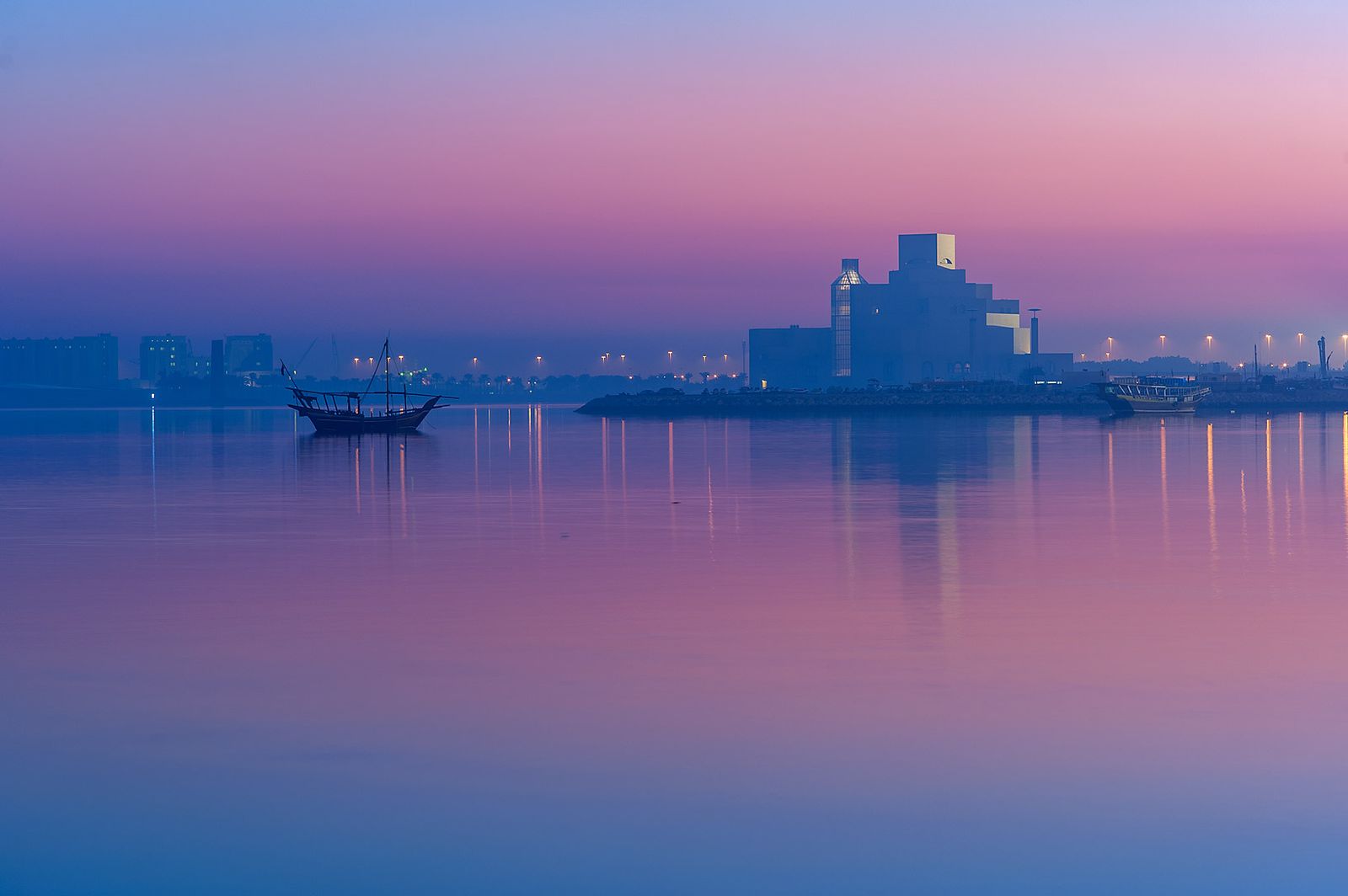
The Museum of Islamic Art across Doha Bay at dusk.
Overview
Six areas and the country beyond
Most of Doha's landmarks line the bay or sit within a short metro ride of it. Start on the waterfront, then work outwards.
-
The Corniche and the Museum of Islamic Art
The bay-front promenade and I. M. Pei's island museum.
-
Souq Waqif and Msheireb
The restored market, then a new downtown with heritage-house museums.
-
The National Museum
Jean Nouvel's desert-rose building on the Corniche.
-
West Bay, Katara and The Pearl
Skyline, cultural village and a man-made island.
-
Education City and Aspire Zone
A landmark library, modern Arab art and the sports museum.
-
Lusail
A new city with a lit-up boulevard and the 2022 final's stadium.
The Corniche and the Museum of Islamic Art
The Corniche is Doha's front porch: a waterfront promenade of about 7 km curving around Doha Bay from the towers of West Bay in the north to the National Museum in the south. Come early or after sunset, when joggers, families and anglers share the path and wooden dhows ride at their moorings.
Beside the old port stands the Museum of Islamic Art, opened in 2008 and designed by I. M. Pei, who was coaxed out of retirement in his nineties. He asked for it to stand on its own man-made island so that nothing could ever crowd it, and its stacked, sand-coloured volumes draw on the 9th-century fountain of the Ibn Tulun Mosque in Cairo. Inside, the collection spans more than 1,400 years of Islamic art from three continents, and the galleries were renovated in 2022.
MIA Park wraps around the museum in a crescent of lawns, one of the best places in the city to watch the skyline light up. At its far end stands 7, a tall steel sculpture by Richard Serra.
Souq Waqif and Msheireb
Souq Waqif, usually translated as "the standing market", is where most visitors spend their first evening. After a fire in 2003 it was rebuilt in a careful restoration that began in 2006 and was largely complete by 2008. Mud-rendered walls, timber beams and narrow lanes now hold spice and textile stalls, perfume sellers, restaurants and cafés where karak tea flows late into the night.
At the falcon souq, hooded birds sit on their perches beside the gear of a sport that is part of Qatar's heritage, and a specialist falcon hospital nearby treats thousands of birds a year.
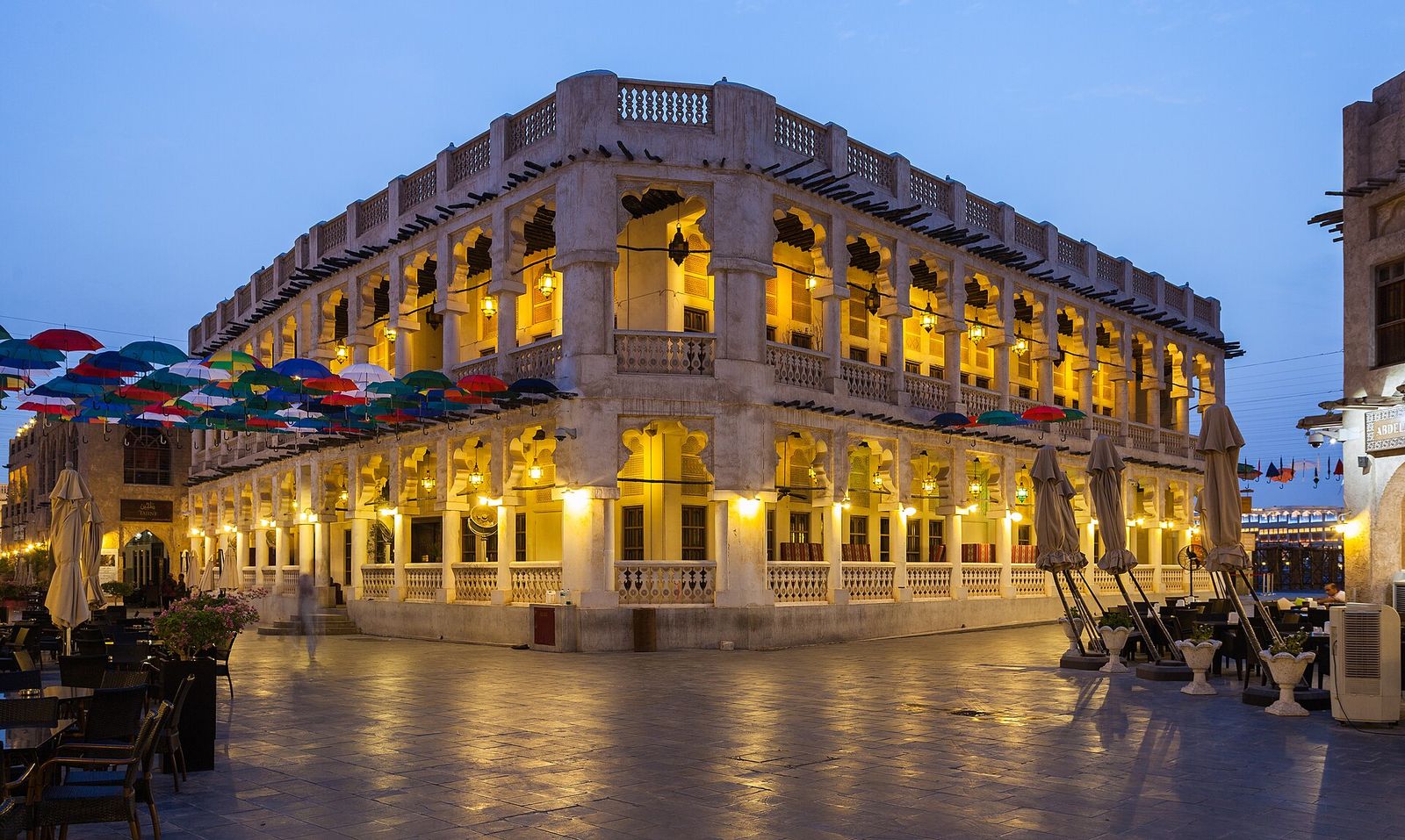
A short walk west, Msheireb Downtown Doha has replaced a worn-out quarter with low-rise, shaded streets that reinterpret Qatari building traditions. The Msheireb Museums occupy four restored heritage houses: Bin Jelmood House on the history of slavery and its abolition, Company House on the first generation of oil workers, Mohammed Bin Jassim House on the district itself, and Radwani House on everyday family life in old Doha.
The National Museum of Qatar
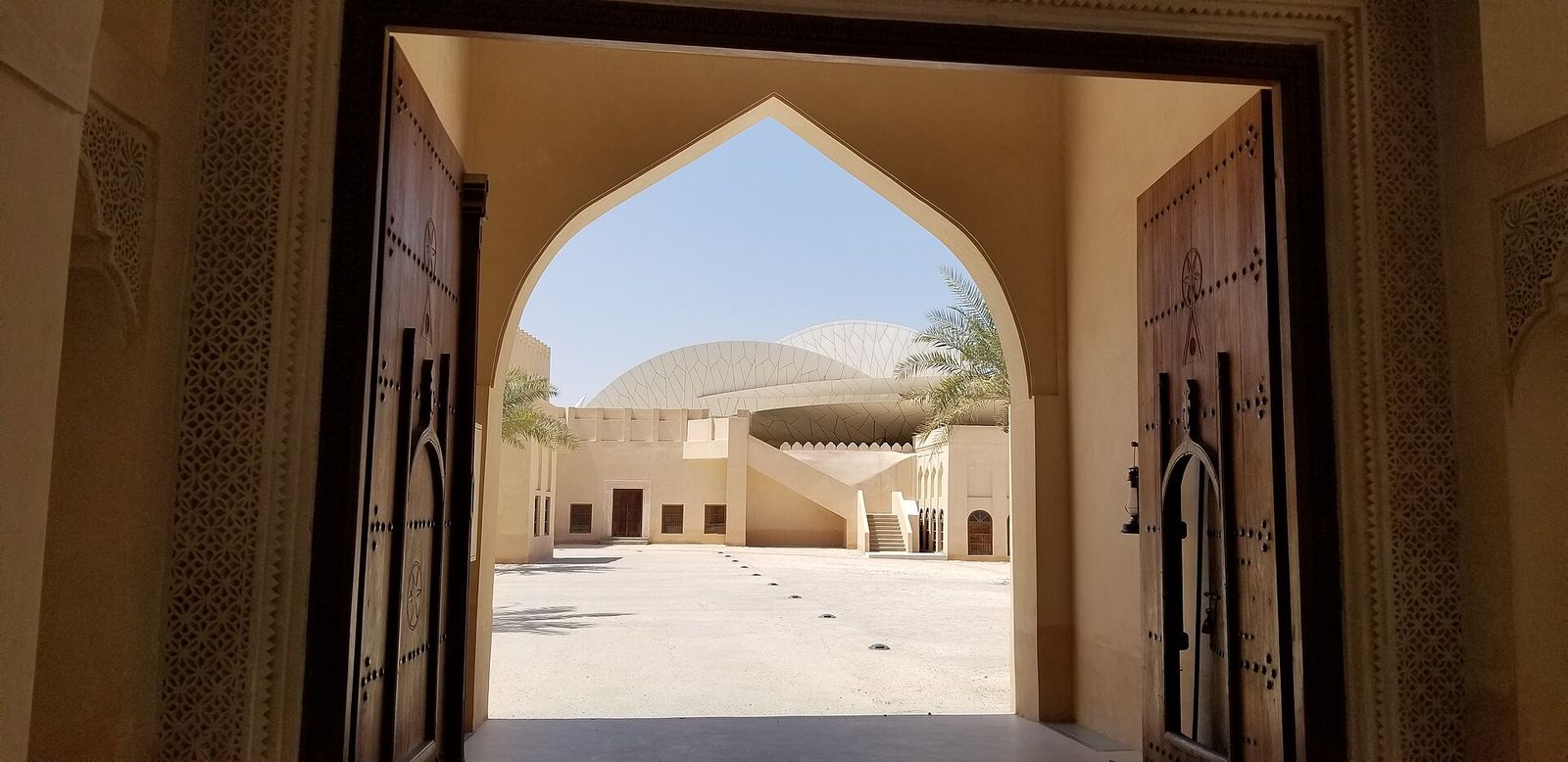
Jean Nouvel's National Museum of Qatar, opened in March 2019, takes its form from the desert rose, a cluster of crystals formed in the sand, rendered as hundreds of interlocking discs that shade the terraces beneath them. The new building wraps around the restored early-20th-century palace of Sheikh Abdullah bin Jassim Al Thani, which housed the original national museum from 1975.
The galleries loop from the geology of the peninsula through desert life, pearling and the oil era to the present, with films projected across curved walls. Outside, a lagoon holds Jean-Michel Othoniel's Alfa, 114 fountain sculptures. Allow two to three hours.
West Bay, Katara and The Pearl
North of West Bay, Katara Cultural Village is a district of theatres, galleries, mosques and a long public beach on reclaimed land, opened in 2010. Its amphitheatre, opera house and drama theatre anchor Doha's performing-arts calendar (see our film and festivals guide), and the Red Line stops at Katara.
Further north, The Pearl is a man-made island of apartments and marinas whose most photographed corner is a canal-lined quarter of pastel buildings inspired by Venice. Go in the late afternoon; there is no metro station, so take a taxi.
Education City and Aspire Zone
West of the centre, on the Green Line, Education City mixes university campuses with cultural institutions. Qatar National Library, designed by Rem Koolhaas's practice OMA and inaugurated in 2018, is one vast, light-filled hall where white shelving rises in terraces around a heritage collection set into a lowered floor. Visitors are welcome to look around. Nearby, Mathaf: Arab Museum of Modern Art shows modern and contemporary Arab art from the 1840s to today in a converted school, built on a collection begun by Sheikh Hassan bin Mohammed bin Ali Al Thani.
A few kilometres south, Aspire Zone is the city's sports campus. The 3-2-1 Qatar Olympic and Sports Museum, opened in 2022 and connected to Khalifa International Stadium, traces sport from the ancient world to the present, with an interactive floor where you can test yourself. Pair it with a sunset walk in Aspire Park.
Lusail
About 20 km north of the centre, Lusail is a city built largely from scratch over the past two decades. Its broad central boulevard, lined with towers and lit up at night, has become a stage for festivals and seasonal events. Football fans will want to see Lusail Stadium, the golden bowl that hosted the 2022 final. The Red Line runs to Lusail, and the Lusail Tram covers the district.
Day trips beyond Doha
Most of Qatar lies within a two-hour drive of the capital, but public transport outside the city is limited, so a car, a taxi for the day or an organised trip is the practical choice. Start early, carry more water than you think you need, and avoid walking in the open in the hottest months.
| Destination | Direction | From Doha | What to expect |
|---|---|---|---|
| Al Wakrah | South | c. 20 km | Restored seafront souq and beach, home of Al Janoub Stadium; Red Line to Al Wakra |
| Al Thakhira mangroves | North-east | c. 60 km | Mangrove channels, birdlife, kayaking |
| Brouq and the Serra sculpture | West | c. 70 km | Desert reserve, rock formations, monumental steel plates |
| Khor Al Adaid | South-east | c. 80 km | Inland sea among high dunes; four-wheel drive only |
| Al Zubarah | North-west | c. 105 km | UNESCO-listed ruined town and a 1930s fort |
Distances are rounded and approximate. Road distances can be noticeably longer than straight-line ones.
Al Zubarah
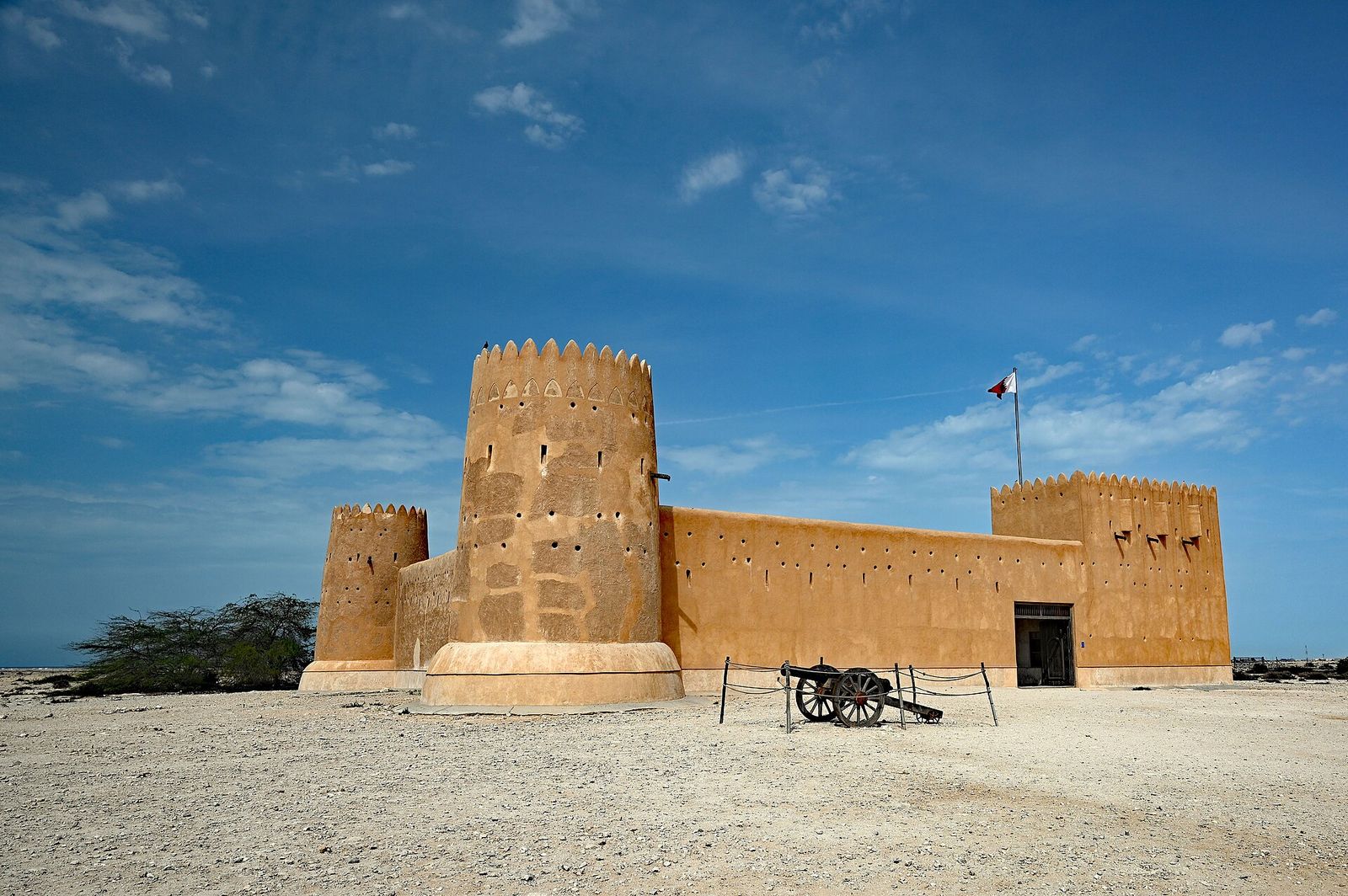
In the far north-west, Al Zubarah was a thriving pearling and trading town in the 18th and 19th centuries before it was abandoned to the sand. Its excavated streets, houses and harbour became Qatar's first UNESCO World Heritage Site in 2013. The fort most visitors photograph is much younger, completed in 1938, and stands a short distance from the old town.
Khor Al Adaid
Khor Al Adaid, the inland sea, is an inlet of the Gulf reaching deep into the dunes on Qatar's south-eastern edge: the country's largest nature reserve, and on UNESCO's tentative list. The final stretch crosses high dunes with no road, so go by four-wheel drive with an experienced driver, and read our travel tips on heat first. Sunset over the water is the reward.
Al Thakhira mangroves
Near Al Khor, roughly an hour's drive north of Doha, the Al Thakhira mangroves form a maze of shallow channels lined with grey mangroves. Kayaking is the classic way to visit; herons and, at times, flamingos feed here. Check the tides before you set out.
Richard Serra in the desert
In the Brouq Nature Reserve near Zekreet on the west coast, four steel plates by the American sculptor Richard Serra, each more than 14 m tall, stand in a line across the desert floor for around a kilometre. The work, completed in 2014, is called East-West/West-East, and the tops of the plates are level with the gypsum plateaus on either side. Walk its length if the heat allows; the scale only makes sense on foot.
Visiting tips
Doha's sights are at their best from roughly November to March, and at the edges of the day the rest of the year. Cover shoulders and knees in museums and souqs; women visiting a mosque will usually be asked to cover their hair. Our getting around guide explains the metro, tram and taxis.
Sights by metro line
- Gold
National Museum, Souq Waqif and the Museum of Islamic Art National Museum and Souq Waqif stations; the museum is a walk away
- Green
Msheireb Museums Msheireb station, where the Red, Green and Gold lines meet
- Red
Katara Cultural Village, Lusail and Al Wakrah Katara, Lusail and Al Wakra stations
- Green
Qatar National Library and Mathaf Qatar National Library and Education City stations
- Gold
3-2-1 Qatar Olympic and Sports Museum Sport City station
- Road
The Pearl and all day trips No metro; taxi, car or organised trip
Services and station access change on big event days. Check the metro operator's current information before you travel.
Plan around the clock
Do outdoor sights early or after sunset and keep museums for midday; Friday mornings are quiet because of midday prayers. Opening hours, entry rules and timetables change, so check the official venue or operator information before you visit.
FAQ
How many days do I need for Doha's sights?
Two full days cover the Corniche, the Museum of Islamic Art, Souq Waqif, Msheireb and the National Museum at a comfortable pace. Add a day for Katara, Education City and Lusail, and a day for each trip into the desert or the north.
Can I reach the main sights by metro?
Most of them. The Gold Line serves the National Museum and Souq Waqif, Msheireb is the interchange for all three lines, the Red Line reaches Katara, Lusail and Al Wakrah, and the Green Line runs to Education City and Qatar National Library. The Pearl and the day-trip destinations need a car or a taxi.
When is Souq Waqif at its best?
After sunset, when the heat eases and the lanes fill. Some stalls close in the afternoon, and the souq is quietest on Friday mornings.
Gallery
More of Doha and beyond
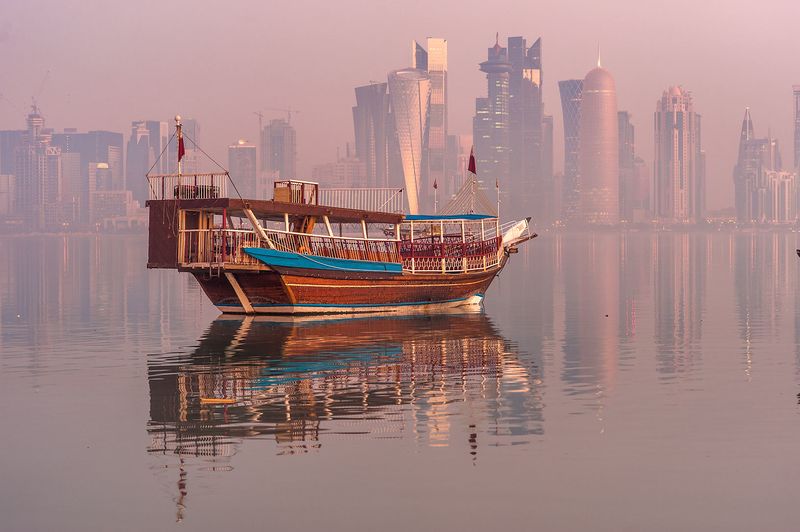
A dhow off the Corniche, West Bay behind. 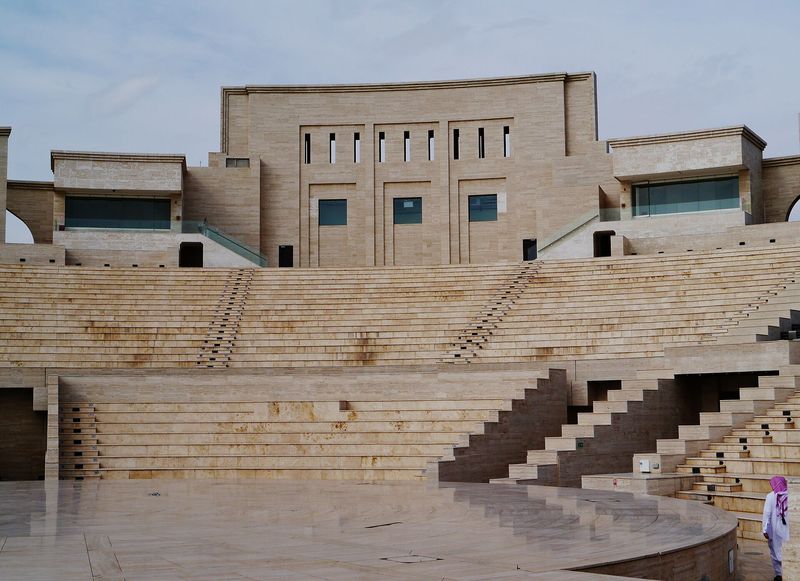
The amphitheatre at Katara Cultural Village. 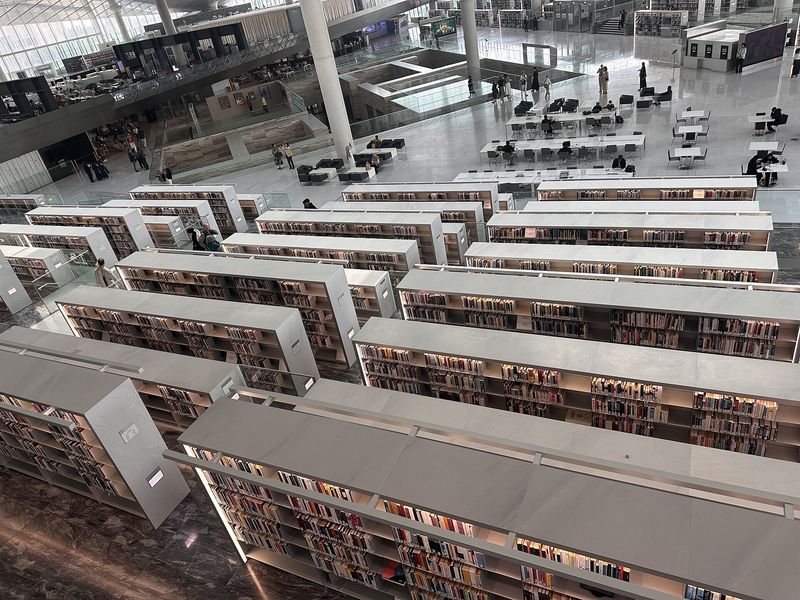
Shelves inside Qatar National Library. 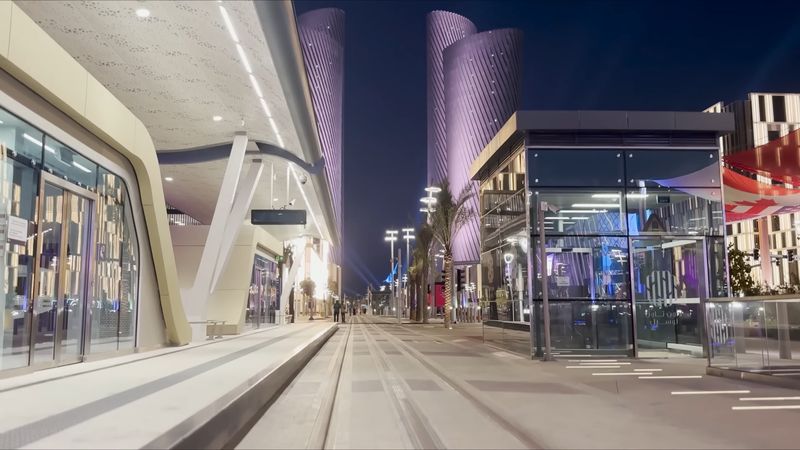
Lusail Boulevard after dark. 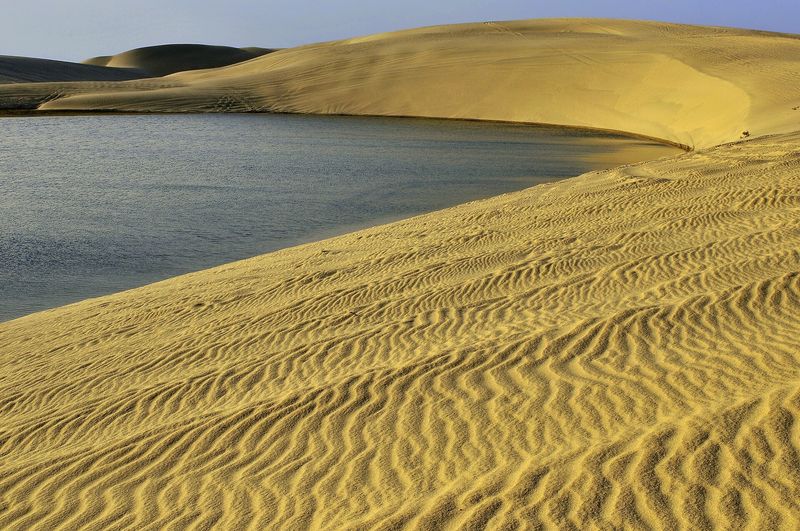
Dunes and water at Khor Al Adaid.