Al Thumama, Doha · Designed by Ibrahim M. Jaidah
Al Thumama Stadium
A white, woven drum modelled on the gahfiya, the cap worn by men and boys across the Arab world. Al Thumama was designed by a Qatari architect and saw Morocco make World Cup history in 2022.
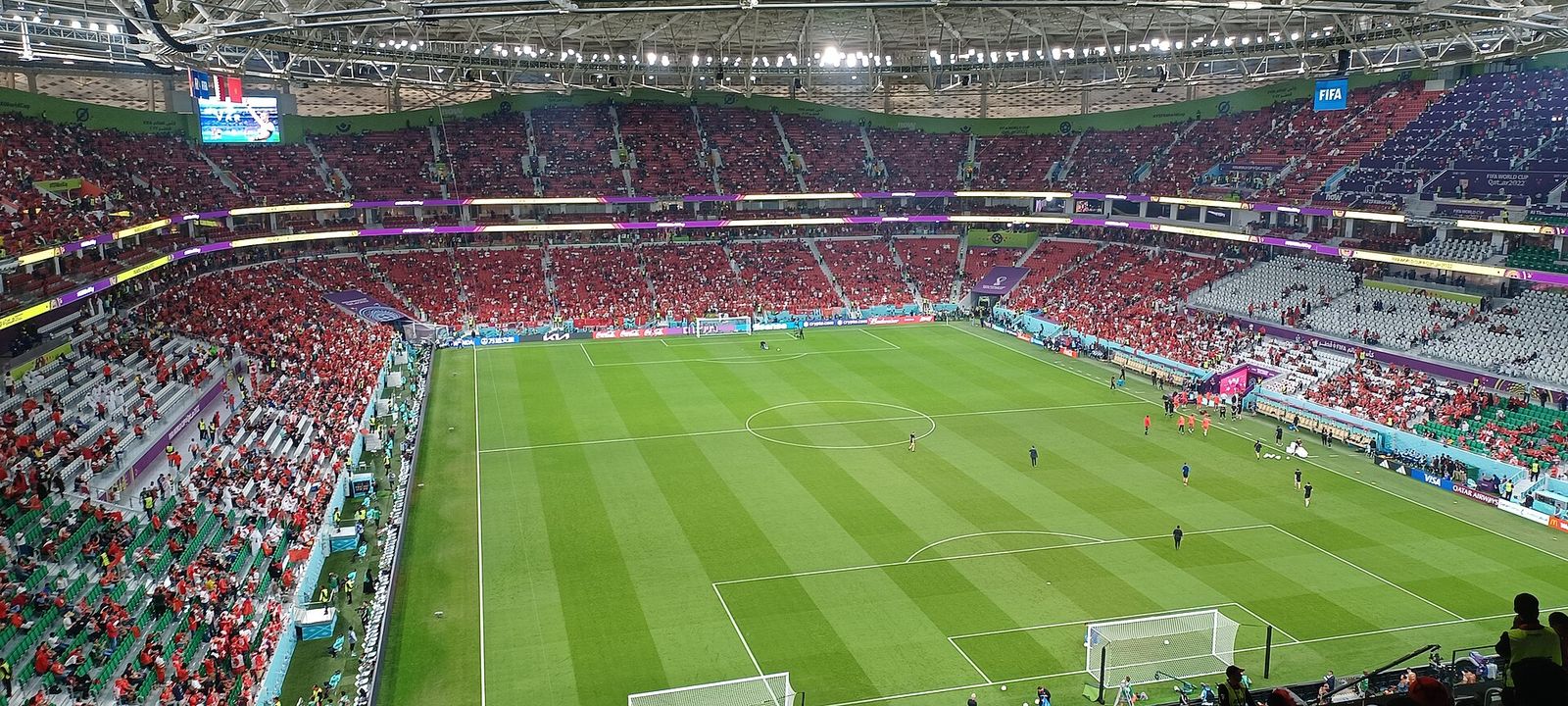
Looking across Al Thumama Stadium from the upper tier on a match night.
Spec sheet
Figures for the 2022 tournament layout- Area / city
- Al Thumama, DohaAbout 12 to 13 km south of the centre, near the airport
- Opened
- 2021Amir Cup final, October 2021
- Tournament capacity
- c. 44,4002022 World Cup layout
- Design concept
- The gahfiya, a woven capIbrahim M. Jaidah, Arab Engineering Bureau
- Nearest metro
- Red Free ZoneThen a feeder bus and a walk
- About the design
- The round, white form and the lattice pattern of the facade reproduce the stitching of the gahfiya, the cap traditionally worn beneath the ghutra headdress.
The stadium in brief
Al Thumama Stadium is the most personal of Qatar's World Cup designs. Its shape is borrowed from the gahfiya, the close-fitting woven cap that men and boys across the Arab world wear on its own or beneath the ghutra headdress, an everyday object turned into a 40,000-plus-seat arena. Its designer, Ibrahim M. Jaidah, chief architect of the Arab Engineering Bureau, is widely described as the first Qatari architect to design a World Cup stadium.
The stadium was inaugurated in October 2021 with the Amir Cup final (sources give the 21st or the 22nd), a little over a year before the tournament. Its 2022 layout held about 44,400 people, and in recent seasons Al-Arabi SC has used it as a home ground.
Where it is
Al Thumama is a mainly residential district on the southern side of Doha, about 12 to 13 km from the centre and close to Hamad International Airport. The stadium sits roughly halfway between the city and Al Wakrah, home of Al Janoub Stadium, which makes the two an obvious pair if you are watching more than one match.
The plans for the site included a public park of around 50,000 square metres wrapped around the stadium, intended for residents on ordinary days as much as for fans on match nights.
Design and architecture
The gahfiya is usually white and decorated with fine woven or embroidered patterns. Jaidah's design scales that up: the stadium is a clean, circular drum, and its facade is a lattice of interlocking openings that recalls the cap's stitching. By day it reads as a simple white form against the sky; after dark, lighting picks out the pattern.
The idea was to choose a symbol that people across the region would recognise instantly. Before construction was finished, the design won the sports and stadiums category of the MIPIM/Architectural Review Future Project Awards in 2018.
Cooling and shade
Like the other tournament venues, Al Thumama uses a cooling system that delivers chilled air close to the seats and the pitch, so matches can be played in comfort outside the coolest months. The approach was first proven at Khalifa International Stadium in 2017.
The circular roof shades the stands, and the park planned around the stadium adds greenery to the approach. Even so, you will feel the heat on the walk in.
History and big matches
Within weeks of opening, the stadium hosted six matches of the 2021 Arab Cup, including Qatar's semi-final against Algeria, which the hosts lost 2–1. A year later it staged eight World Cup matches, starting with the Netherlands' 2–0 win over Senegal on 21 November 2022. Spain thrashed Costa Rica 7–0 here, and on 25 November Mohammed Muntari headed Qatar's first-ever World Cup goal, in a 3–1 defeat by Senegal.
Above all, Al Thumama became Morocco's lucky ground. They beat Belgium 2–0 and Canada 2–1 here in the group stage, and on 10 December 2022 a 1–0 win over Portugal in the quarter-final, watched by a record crowd of 44,198, made them the first African team to reach a World Cup semi-final. France had beaten Poland 3–1 at the same stadium in the round of 16.
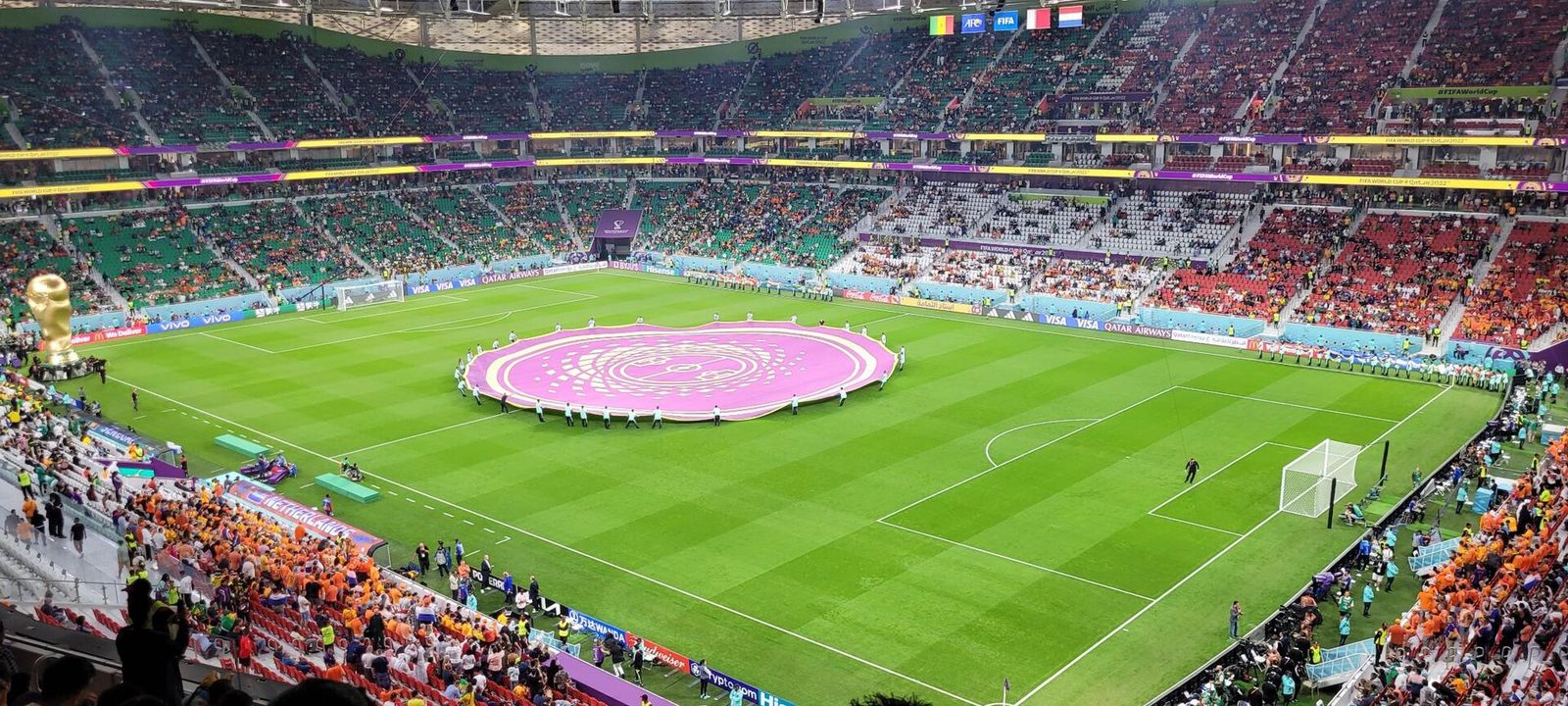
The stadium was back in the national spotlight during the 2023 Asian Cup, played in early 2024. On 7 February Qatar beat Iran 3–2 here in the semi-final, on the way to retaining their title.
Legacy plans
Al Thumama was built with a demountable upper section. The plan published before the tournament was to remove about half of the seats, taking the capacity to around 20,000, and to donate them to countries that need sporting infrastructure. The same plans included a boutique hotel built into part of the upper tier and a branch of a sports-medicine clinic on site.
Around the stadium, the precinct was to gain football pitches for local teams, courts and pools for other sports, and running and cycling routes through the park. Progress varies, so treat these as intentions rather than finished facilities.
Getting there
There is no metro station at the stadium. The nearest is Free Zone on the Red Line, on the branch towards Al Wakra, and from there you need a feeder bus or, on big match days, an event shuttle, followed by a walk to the gates. A taxi or ride-hailing car is often simpler on ordinary days. For an overview of the network, see Getting Around.
How to get there
-
Take the Red line to Free Zone
Board a southbound train heading for Al Wakra, not the airport branch, and get off at Free Zone, the stop after Oqba Ibn Nafie.
-
Continue by feeder bus or shuttle
A metro feeder bus links Free Zone with the Al Thumama area, and organisers have run dedicated shuttles on major match days. Routes can change, so check on the day.
-
Walk the last stretch
Depending on where you are dropped and which gate you need, the final walk can take anywhere from about 10 to 30 minutes.
Event-day arrangements change. Check the metro operator's and the venue's current information before you travel.
Around the stadium
Al Thumama itself is residential, so plan your sightseeing elsewhere.
Central Doha
The Red Line runs north from Free Zone to Msheireb in five stops, putting Souq Waqif, Msheireb Downtown Doha and, a little further on, the Corniche and the Museum of Islamic Art within easy reach before or after a match. Our Sights guide covers them district by district.
Al Wakrah
Two stops south, Al Wakrah has a seafront souq and beach that are at their best around sunset, and the sail-roofed Al Janoub Stadium.
Hamad International Airport
The airport is close by, which makes Al Thumama the handiest venue on the day you fly in or out, though match-day roads are slow.
Visiting tips
Because the final leg involves a bus and a walk, allow more time than you would for a stadium beside a station. For big matches, aim to reach Free Zone two hours before kick-off. Between May and September daytime highs reach around 39 to 42 °C, and even in November they are often about 30 °C, so carry water and cover up for the walk.
What to carry
- A refillable water bottle, if the venue's rules allow it
- A hat and sunscreen for bus queues and the walk to the gates
- A light layer for the cooled stands and the metro
- A charged phone with your digital ticket and the route home saved
- A small bag only, as bag rules at entry can be strict
Check before you go
Opening hours, entry rules and timetables change, so check the official venue or operator information before you visit. The Matchday Guide covers security, heat and getting home.
Frequently asked questions
What is a gahfiya?
A close-fitting cap, usually white and finely woven or embroidered, worn by men and boys across the Arab world. In the Gulf it is often worn under the ghutra headdress. The stadium's round shape and patterned facade are based on it.
Which metro station is nearest to Al Thumama Stadium?
Free Zone on the Red Line. It is not within comfortable walking distance, so continue by feeder bus, event shuttle or taxi.
Who designed the stadium?
Qatari architect Ibrahim M. Jaidah, chief architect of the Arab Engineering Bureau, who is widely credited as the first Qatari to design a World Cup stadium.
What happened here at the 2022 World Cup?
Eight matches, including Qatar's first-ever World Cup goal and Morocco's 1–0 quarter-final win over Portugal, which made Morocco the first African semi-finalists in the tournament's history.