Lusail
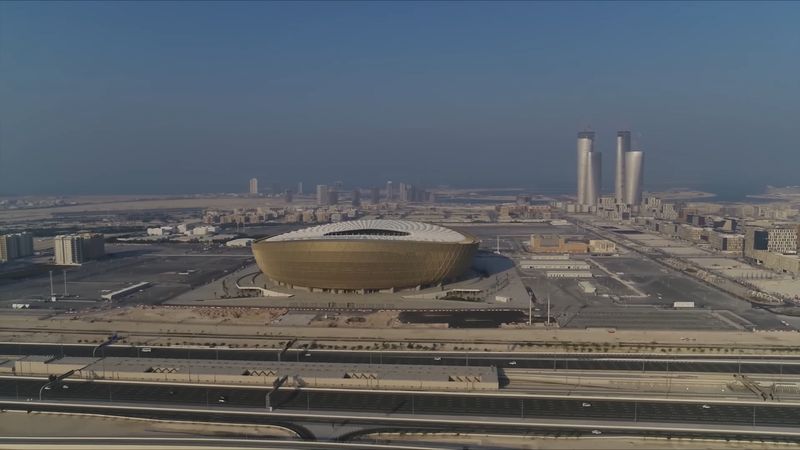
Lusail Stadium
The golden bowl built for the 2022 final, its facade inspired by traditional Arab vessels and the play of light in fanar lanterns.
- Opened
- 2022
- 2022 seats
- c. 89,000
Independent visitor guide to Qatar
Eight World Cup stadiums on one compact map, a driverless metro that reaches most of them, cinemas with late-evening shows and a capital that comes alive once the heat drops. QitketsQat is a practical, independent guide to all three.
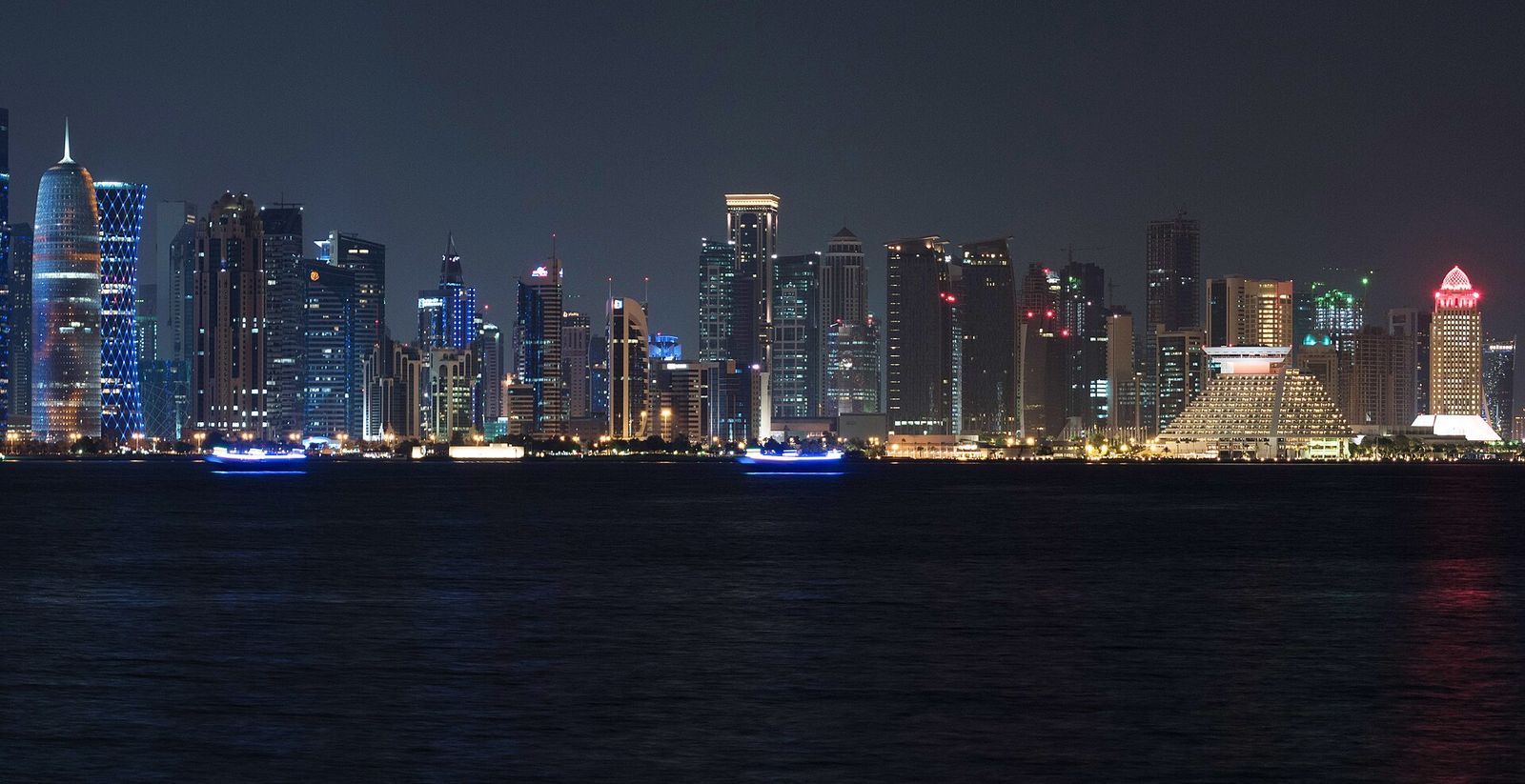
West Bay, Doha, after dark
The 2022 venues
In 2022 Qatar staged the first FIFA World Cup in the Middle East, and one of the most tightly packed in the tournament's history. Seven of the eight venues sit in Doha or the municipalities around it; only Al Bayt, up the coast in Al Khor, calls for a proper road trip. Most still host league and cup football, and several were back in the spotlight for the AFC Asian Cup in early 2024 and the FIFA Arab Cup in December 2025.
Lusail
The golden bowl built for the 2022 final, its facade inspired by traditional Arab vessels and the play of light in fanar lanterns.
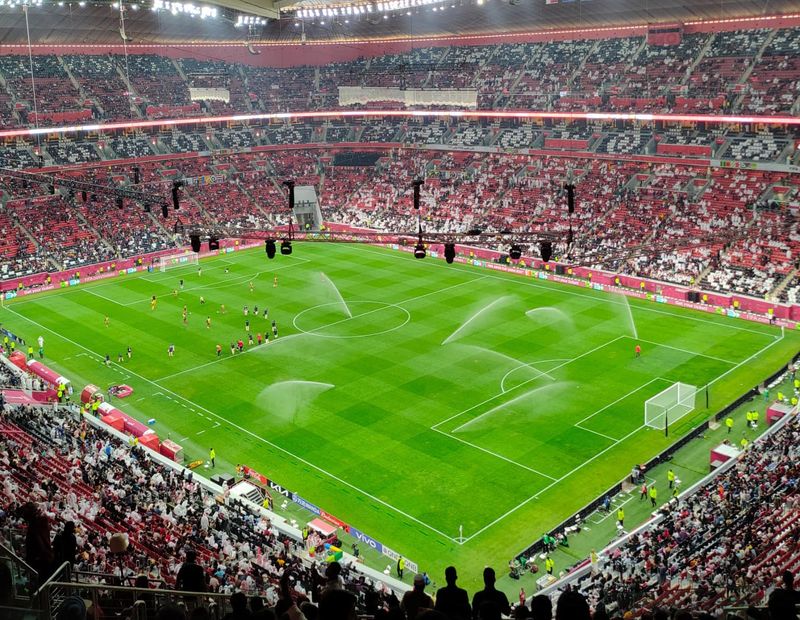
Al Khor
A vast black, white and red tent modelled on the bayt al sha'ar of the region's nomadic peoples, with a roof that can close.
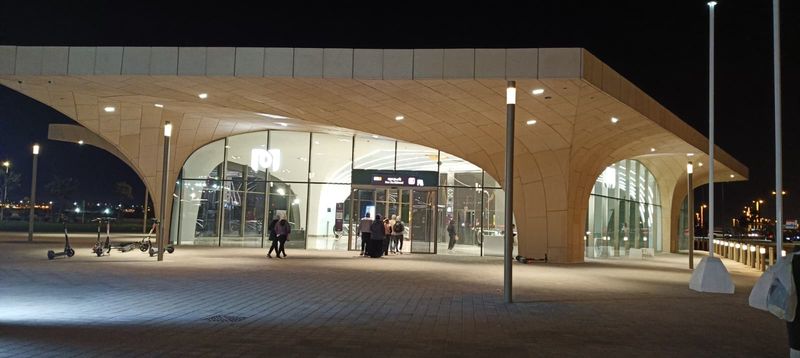
Pictured: Ras Bu Abboud metro station, the stop for the stadium
Ras Abu Aboud, Doha
A waterfront arena assembled from shipping containers; the name recalls the 974 containers used and Qatar's international dialling code.
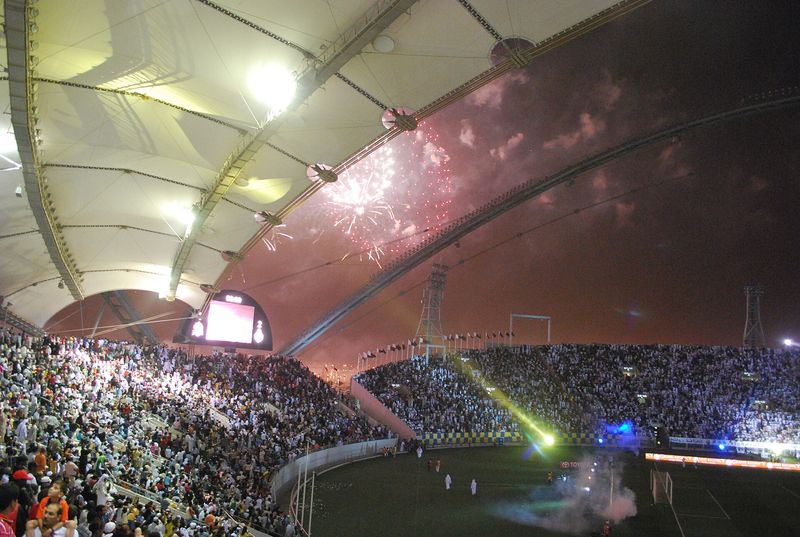
Pictured in 2009, before the rebuild
Aspire Zone, Al Rayyan
The veteran of the eight: opened in 1976, then rebuilt beneath two sweeping arches and reopened in 2017.
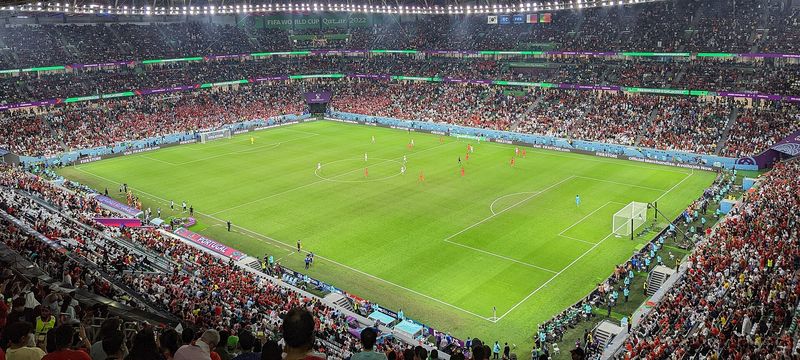
Education City, Al Rayyan
Nicknamed the Diamond in the Desert for its skin of triangular panels, which seem to change colour as the sun moves.
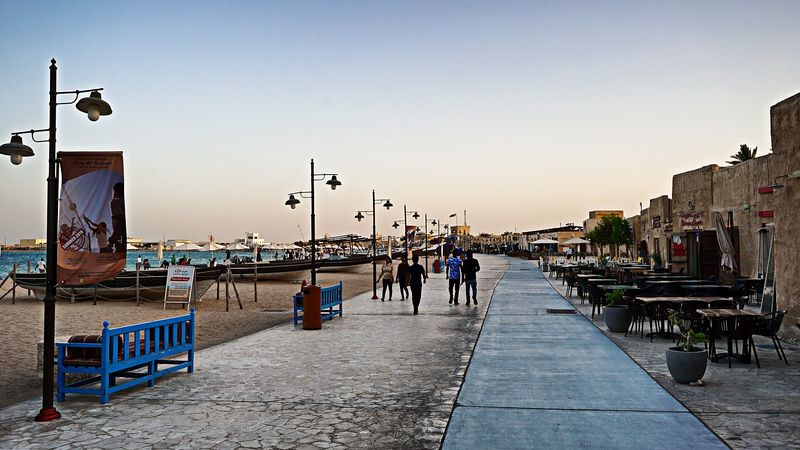
Pictured: the Al Wakrah seafront, not the stadium
Al Wakrah
Zaha Hadid Architects shaped its curving roof after the sails of the dhows once used by the town's pearl divers.
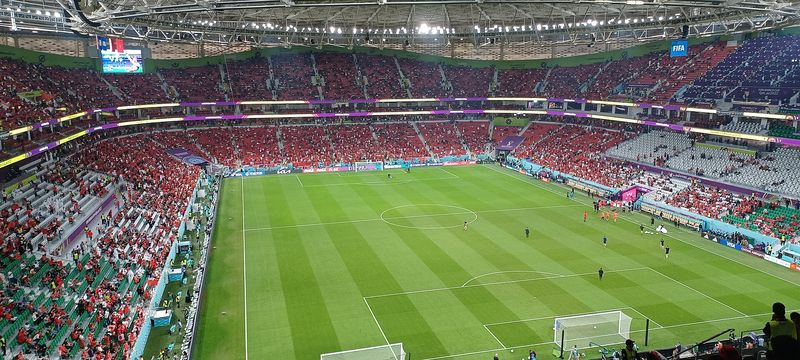
Al Thumama, Doha
A white circular form based on the gahfiya, the woven cap worn by men and boys across the Arab world.
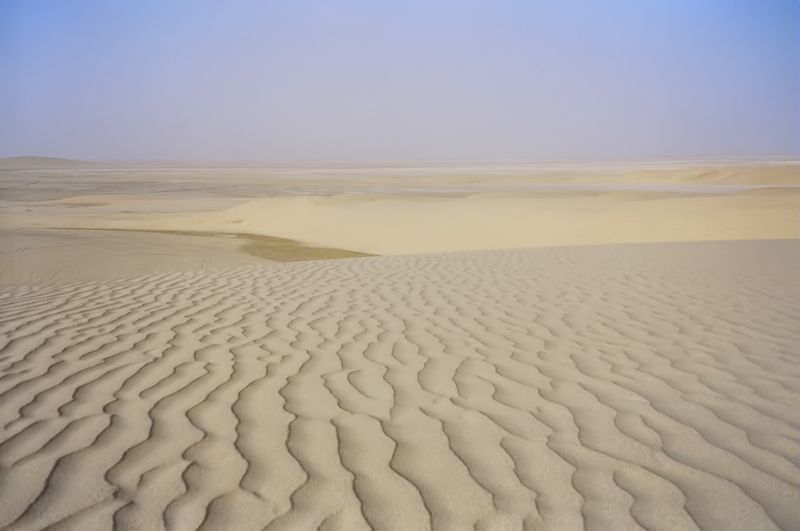
Pictured: Qatari desert dunes, not the stadium
Al Rayyan
Home of Al Rayyan SC, rebuilt with a facade of patterns that draw on the desert, native wildlife and the country's trading past.
Capacity at a glance
Lusail was built for the final and dwarfs the rest: its tournament layout held almost 89,000 people. Al Bayt, which staged the opening match, seated close to 69,000.
The other six were planned around 40,000 seats each, many of them with modular upper tiers meant to be taken down after the tournament. Those reductions have moved at different speeds, so read the chart as the 2022 layout rather than today's count, and check the current figure with the venue before a big game.
More sport
Long before 2022, Doha had made a habit of staging world championships in the cooler months, and the calendar keeps filling: the Asian Games return to the city in 2030.
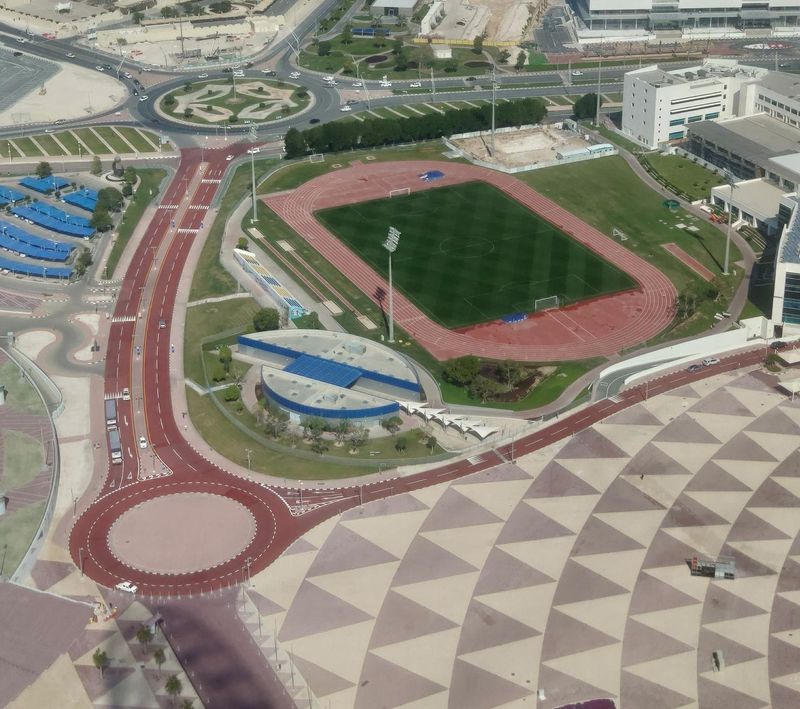
Most of Qatar's other big venues cluster in two places. Aspire Zone in Al Rayyan wraps Khalifa International Stadium in a campus of indoor halls, training pitches, an aquatics centre and a park that fills with joggers after sunset. To the north, the Lusail area holds the motor-racing circuit and a large indoor arena as well as the stadium.
Both are on the metro, Aspire Zone via the Gold Line and Lusail via the Red Line, though the circuit itself sits a drive away from the nearest station. On race weekends and tournament days the roads around both fill early, so leave plenty of time.
Motorsport
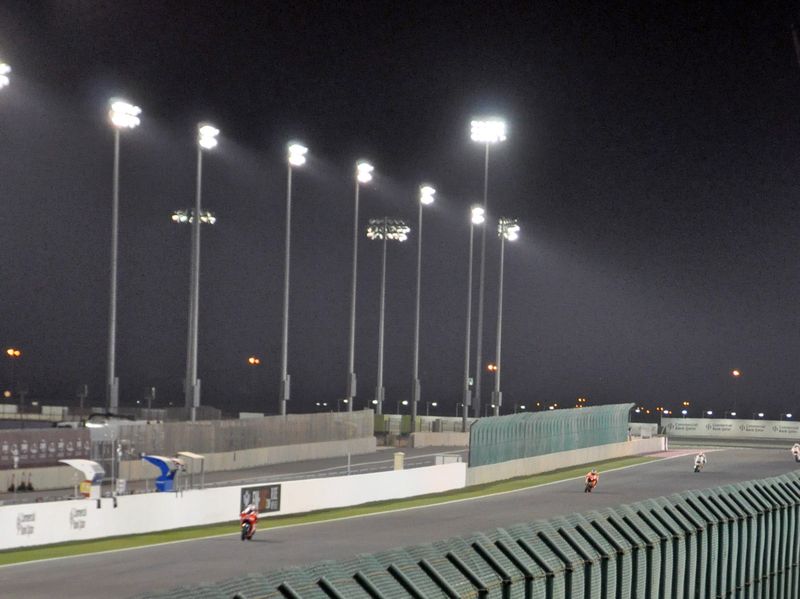
Opened in 2004, the circuit north of Doha staged the first night race in MotoGP history in 2008. Formula One followed in 2021, and both championships now race here under floodlights.
Tennis
Professional men's tennis has been played here since the early 1990s and a women's tournament since the early 2000s, both early in the calendar year when evenings are mild.
Athletics
Khalifa International Stadium hosted the 2006 Asian Games and the 2019 World Athletics Championships, while the Aspire Dome next door staged the World Indoor Championships in 2010.
Aquatics
Doha hosted the World Aquatics Championships in February 2024: diving at the Hamad Aquatic Centre, swimming in a temporary pool inside the Aspire Dome, and open-water racing and high diving at Old Doha Port.
Indoor arenas
Lusail's indoor arena held the final of the 2015 World Men's Handball Championship, and Qatar is due to host the FIBA Basketball World Cup in 2027.
Cinema
Going to the cinema is one of Qatar's favourite night-time habits, and the easiest escape from the midday heat. Most screens sit inside the big shopping centres in and around Doha, where the latest international releases run alongside Arabic, Indian and other Asian films.
Thursday and Friday evenings tend to be the busiest, because the weekend falls on Friday and Saturday. Age classifications are taken seriously, and auditoriums are kept cool enough that a light layer is worth carrying.
Several cinemas run extra-large screens with immersive sound systems, which is where the season's blockbusters land first.
Smaller premium auditoriums swap rows of seats for wide reclining chairs, with service brought to your seat.
Listings give the soundtrack language, the subtitle language and the age rating of every show. Check all three before you choose.
Film & festivals
Qatar's film culture is younger than its stadiums and growing quickly. The Doha Film Institute, set up in 2010, funds and mentors filmmakers from the region and runs two long-standing events: Ajyal, a festival judged by juries of children and young people, and Qumra, a spring gathering for first- and second-time directors.
In November 2025 the institute launched the Doha Film Festival, with screenings spread across Katara Cultural Village, Msheireb Downtown Doha and the Museum of Islamic Art. Dates and formats change from year to year, so check the organisers' announcements before you plan a trip around a festival.
Sights
Between matches the city rewards slow exploring. Distances are short, but for much of the year the daytime heat makes early mornings and evenings the time to walk.
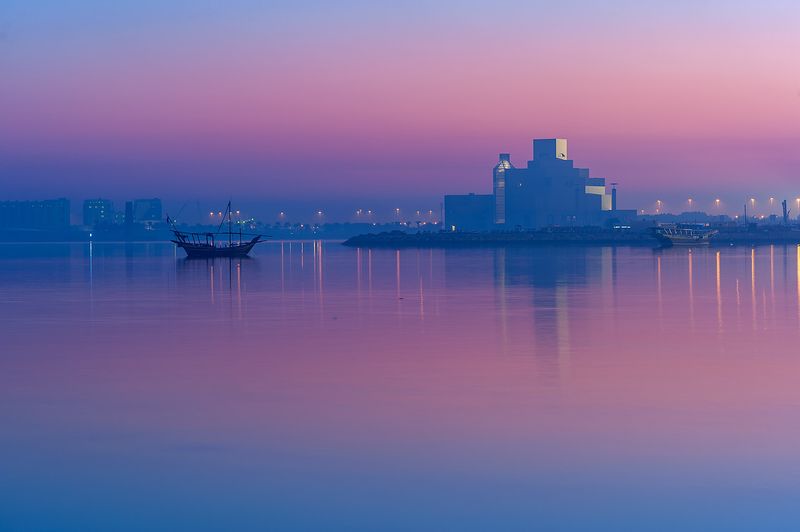
The waterfront promenade curves for several kilometres around Doha Bay. At one end, I. M. Pei's Museum of Islamic Art stands on its own man-made island, with a park beside it.
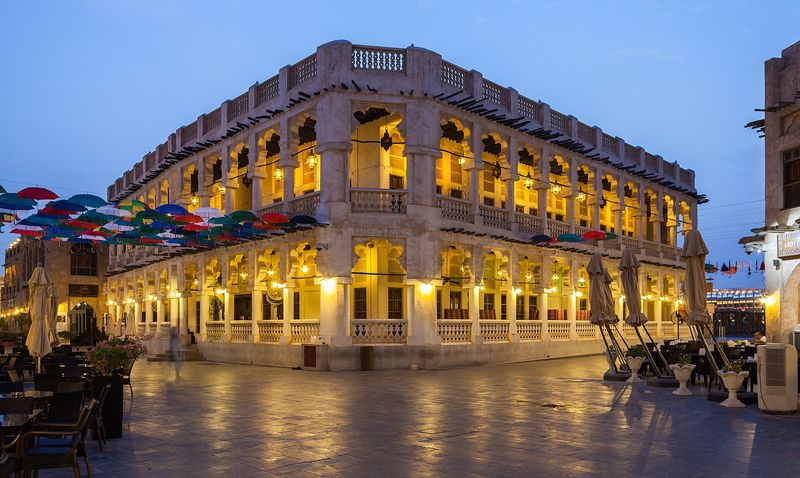
The restored lanes of Souq Waqif are busiest after sunset. A short walk away, Msheireb Downtown Doha pairs new low-rise architecture with the Msheireb Museums.
Jean Nouvel's National Museum of Qatar, shaped like a desert rose crystal, wraps around the restored palace of Sheikh Abdullah bin Jassim Al Thani.
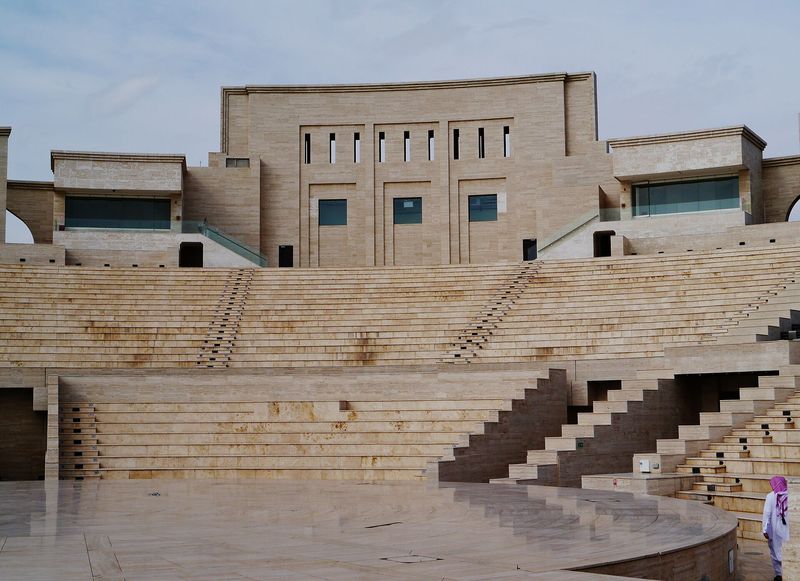
The skyline district, the cultural village of Katara with its amphitheatre and beach, and the marinas of The Pearl further north.
University campuses and Rem Koolhaas's Qatar National Library, plus the 3-2-1 Qatar Olympic and Sports Museum beside Khalifa International Stadium.
Al Zubarah, a UNESCO World Heritage Site in the north-west, and the dunes of Khor Al Adaid, the inland sea in the far south-east.
Season planner
The comfortable window runs roughly from November to March. In mid-winter, daytime highs in Doha sit in the low to mid-20s °C and evenings outdoors are a pleasure. October and April are warm, and from May to September heat and humidity make long spells outside hard work. Most outdoor events, from race weekends to festivals, cluster in the cooler months.
Two dates shape the calendar. Ramadan moves about eleven days earlier each year; in 2027 it is expected to begin in early February, changing opening hours and the rhythm of the day. Qatar National Day on 18 December brings celebrations and big crowds, especially along the Corniche.
Average daily high in Doha
Rounded, in °C, with a rough guide to comfort
Based on Qatar Meteorological Department climate normals for 1992 to 2021. Humidity is highest in late summer and in the winter months.
Getting around
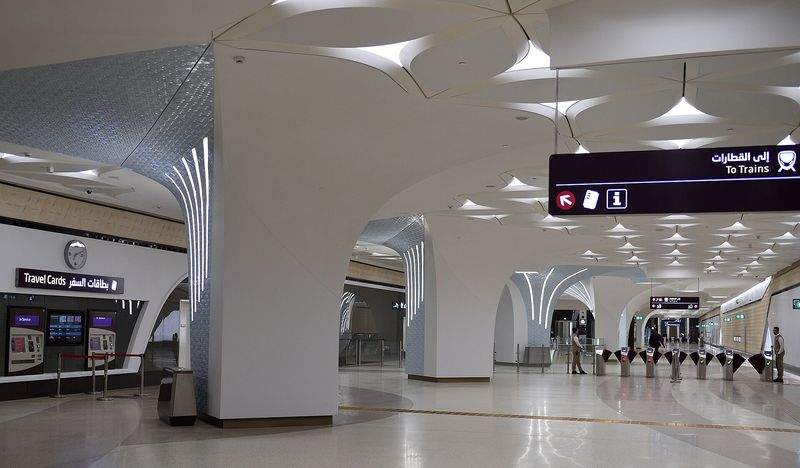
The driverless Doha Metro opened in 2019 and runs three lines over some 76 km of track. The Red Line links Hamad International Airport with Al Wakrah in the south and Lusail in the north; the Green Line heads west through Education City; the Gold Line crosses the city from Ras Bu Abboud to Al Aziziyah, stopping at Sport City for Aspire Zone. Lusail has its own tram, feeder buses fan out from many stations, and taxis and ride-hailing apps fill the gaps.
Lusail Stadium Lusail station
Al Janoub Stadium Al Wakra station, then a walk or shuttle
Al Thumama Stadium Free Zone station, then a feeder bus
Education City Stadium and Ahmad bin Ali Stadium Education City and Al Riffa stations
Stadium 974 and Khalifa International Stadium Ras Bu Abboud and Sport City stations
Al Bayt Stadium, Al Khor No metro; on big match days organisers usually run shuttle buses
Services change on big event days. Check the metro operator's current information before you travel.
Our matchday guide covers getting in, what to carry, staying cool and getting home afterwards. Pair it with the travel tips for dress, etiquette and the practical details of a first visit.